
Case Study: Tank Pressure Release Detection Without Pressure Instrumentation
Background

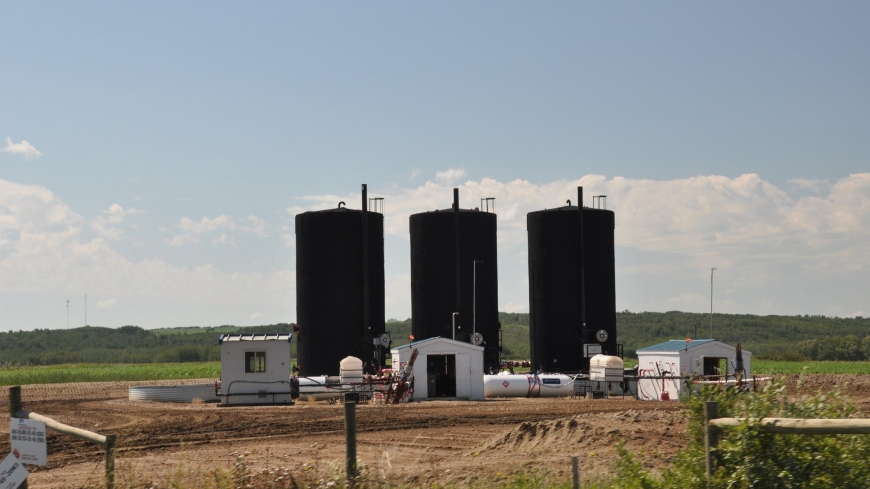
Storage tanks are a common source of intermittent methane emissions at upstream oil and gas facilities. Pressure release events can occur when vapour generation or liquid loading causes tank pressure to exceed normal operating conditions, resulting in venting through pressure-relief devices or thief hatches. These events may be short-lived, difficult to observe during periodic inspections, and challenging to quantify when tanks are not equipped with dedicated pressure, temperature, or vent-flow instrumentation.

At many multi-tank batteries, however, existing SCADA systems already collect operational data from connected equipment, including separator pressure, gathering-line temperature, production rates, and vapour recovery unit flow. Although these measurements do not directly measure tank pressure, changes across multiple signals can create a distinct operational fingerprint when a pressure release occurs.

AroIQ uses these existing proxy signals to establish a baseline for normal battery operation and identify statistically anomalous patterns associated with tank pressure releases. This enables continuous, site-wide monitoring without installing instrumentation on every tank, helping operators detect events sooner, investigate likely causes, and prioritize operational response.


Objective: Detect and attribute tank pressure release events at batteries where no dedicated pressure or temperature sensors are installed on storage tanks.

Location: Western Canadian Sedimentary Basin

Sector: Upstream oil and gas production, Client >500,000 BOE/day

Dataset: Multi-tank battery · SCADA-only instrumentation

Screenshot_2026-07-21_at_10_39_02 AM.png
Image: Three representative operating scenarios. Proxy signals (VRU flow, separator pressure) each carry a distinct fingerprint that AroIQ distinguishes — without a pressure sensor on the tank itself.

Approach
  • Identified proxy SCADA signals with observable response during release events — VRU inlet flow, separator pressure, gathering line temperature, and production rate
  • Trained cluster model on historical SCADA to characterize normal battery operating regimes
  • Release events identified as statistically anomalous departures from established operating clusters

Benefits
  • Enables continuous tank monitoring at all battery sites — not just those with dedicated pressure instrumentation
  • Reduces detection latency from days (inspection cycle) to minutes, enabling faster operator response

Key Findings
  • All three release scenarios — pre-release breathing, acute release, and extended bleed — were identifiable from existing SCADA without new instrumentation
  • Proxy signals provided sufficient specificity to distinguish release events from normal operations

Context

  • Most tank batteries lack dedicated PRV or hatch instrumentation; pressure releases go undetected until inspection
  • SCADA-based detection enables continuous monitoring at all sites, not just instrumented facilities

Interested in applications at your facilities? Contact info@arolytics.com to learn more!